Are Gender-Specific Recovery Groups Better for Some Clients in Troy, NY?
October 11, 2026
.png)

October 11, 2026

That question doesn't really have a clean yes-or-no answer, and honestly, anyone who gives you one probably hasn't spent much time doing this work. What the evidence actually supports, and what we see pretty consistently in clinical practice, is that for a lot of people in outpatient treatment, gender-specific groups aren't just a preference.
They're the setting where the real work can actually happen. For others, though, a mixed-gender group just fits better. It really comes down to the person, their history, and what they need out of the group experience.
At our certified outpatient rehab in Troy, NY, we offer gender-specific groups for men and women as part of a broader program that includes individual counseling, dual-focused groups for co-occurring mental health and substance use, and medication-assisted treatment where it's clinically appropriate.
Group placement is a clinical decision, not just a default, and it starts with a real intake conversation before a client ever sits in on their first session.
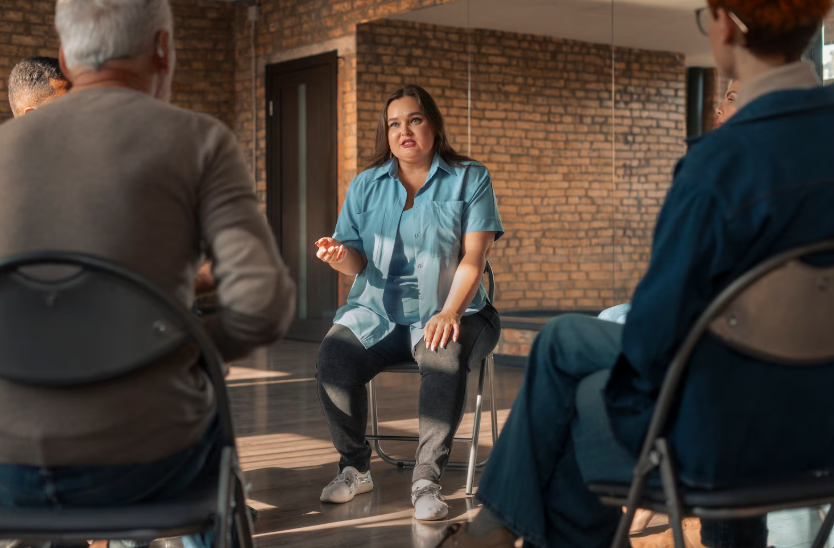
A gender-specific recovery group is basically a structured group therapy session led by a licensed clinician, except everyone in the room shares the same gender. The content covered isn't fundamentally different from what other outpatient groups address.
Relapse prevention, emotional regulation, coping strategies, and the personal patterns behind substance use are all part of the work, kind of how dual-focused groups support recovery when something like trauma or anxiety is tangled up with the addiction. What changes is the dynamic in the room.
Many clients find it a lot easier to speak honestly when certain social dynamics are simplified. That's not a reflection of deficiency, not even close. It's really just a recognition that people communicate differently depending on context, and therapy works best when that context supports honest participation.
A skilled group leader shapes that context, sure, but group composition sets the foundation first. The two things work together, and a well-run gender-specific group is never just a standard group with a shorter guest list.
The clearest pattern we see is with clients carrying a significant trauma history, especially when that trauma involved interpersonal harm. Trauma shapes how people engage in group settings, how much they open up, and how safe they feel doing it, which is honestly a big part of how social circles affect recovery early on.
For these clients, a gender-specific setting often closes the gap between what they need to say and what they actually feel able to say in a room full of people.
Women with trauma histories tend to be particularly well-served by gender-specific groups, and the research backs this up pretty consistently. A substantial majority of women entering addiction treatment have experienced at least one significant traumatic event, and for a lot of them, that trauma is interpersonal in nature.
For these clients, a women's group isn't just a comfort preference. Programs that track outcomes by group format tend to show that women with trauma histories complete treatment at higher rates and report more meaningful engagement when they're placed in gender-specific groups.
For men, the reasoning has some parallels, though it plays out a bit differently. A lot of men in treatment carry real shame around asking for help, around being vulnerable, and around how their substance use has hurt their relationships.
A men's group can ease up on the performance of stoicism that sometimes shows up in mixed settings and actually make room for that work to happen.

The clinical literature on gender-specific groups in addiction treatment points in a pretty consistent direction. For clients with co-occurring trauma, the kind you might be working through in a dual diagnosis outpatient treatment program, women in particular tend to show better outcomes in trauma-informed group settings that are gender-specific.
Research published in the Journal of Substance Abuse Treatment found that women in gender-specific programming showed higher completion rates and greater reductions in substance use at follow-up compared to women in mixed-gender groups. Similar findings have shown up across programs treating trauma alongside substance use disorder.
For men, the evidence is a bit less uniform, but it's still supportive of offering gender-specific groups as a genuine option. Men with co-occurring trauma or real shame around substance use tend to engage more productively in gender-specific settings.
Men further along in recovery, or whose goals center more on relationship dynamics and communication patterns, may actually find that a mixed-gender group offers more realistic practice.
The research doesn't support some blanket claim that one format beats the other across the board. It supports offering both, honestly, and making the placement call based on the actual person.
Wondering whether a dual diagnosis or a trauma history might be shaping your own experience in treatment? Give us a call at (518) 793-7273, and we'll help you figure out which group setting actually fits.
Group placement at our Troy clinic starts with the initial assessment, plain and simple. That conversation covers substance use history, trauma background, previous treatment experiences, and how a person has tended to function in group settings before.
Based on what comes out of that, our clinical team makes a recommendation about which group format is the best starting point.
Gender-specific groups are part of a larger schedule, not some standalone offering. A client might attend a women's group on some days and a dual-focused group addressing co-occurring mental health and substance use on others.
Some clients managing their recovery on buprenorphine or methadone attend both medication management appointments and gender-specific group sessions in the same week. The program is built around the person, and the group components reflect where they actually are in treatment at any given point.
Treatment plans aren't fixed, not even close. If a client starts in a gender-specific group and finds a different format serves them better down the line, our clinical team will adjust. The goal is for each person to land in the setting where they can do their best work, and honestly, that can shift.
Some clients actually do better in a mixed-gender group, and our clinical team will say so when that's the honest recommendation. People further along in recovery, who've already worked through their core trauma individually, sometimes find that a mixed-gender setting offers a different kind of challenge and growth.
Working on communication patterns and relationship dynamics in a more realistic social context can be genuinely useful, especially when the goal is building skills that actually transfer to daily life.
There are also clients for whom group composition just isn't the most relevant clinical variable. Their treatment needs center on other factors, and who else is in the room matters less than how well the group is run, how consistent the schedule is, and how clinically deep the program goes.
For those clients, the best group is simply the one that fits their treatment plan and their life. The decision about group placement is always individual, and it gets made with the client, not for them.
Our team at Conifer Park is here to support you as you take the first step toward recovery. Whether you are seeking help for yourself or supporting a loved one, our compassionate professionals provide personalized outpatient care built around your life.
With evidence-based programs that include intensive outpatient treatment, counseling, and relapse prevention strategies, we are committed to helping you build a healthier, more stable future.
Address: 2431 6th Ave, Troy, NY 12180, United States
Phone: (518) 793-7273
Office hours are Monday through Friday, 8:00 AM to 6:00 PM, and Saturday, 8:30 AM to 11:00 AM. Walk-ins are welcome during these hours. Contact us using the form below, or call our intake team directly for immediate assistance.
You can verify insurance, explore flexible treatment options, and get guidance on the program that best fits your situation. Every conversation is confidential, and help is available when you are ready.
Related Topics:






.png)

.png)
.png)









.jpg)



































.jpg)