What Co-Occurring Treatment Means in an Outpatient Setting in Troy, NY
September 22, 2026
.png)

September 22, 2026
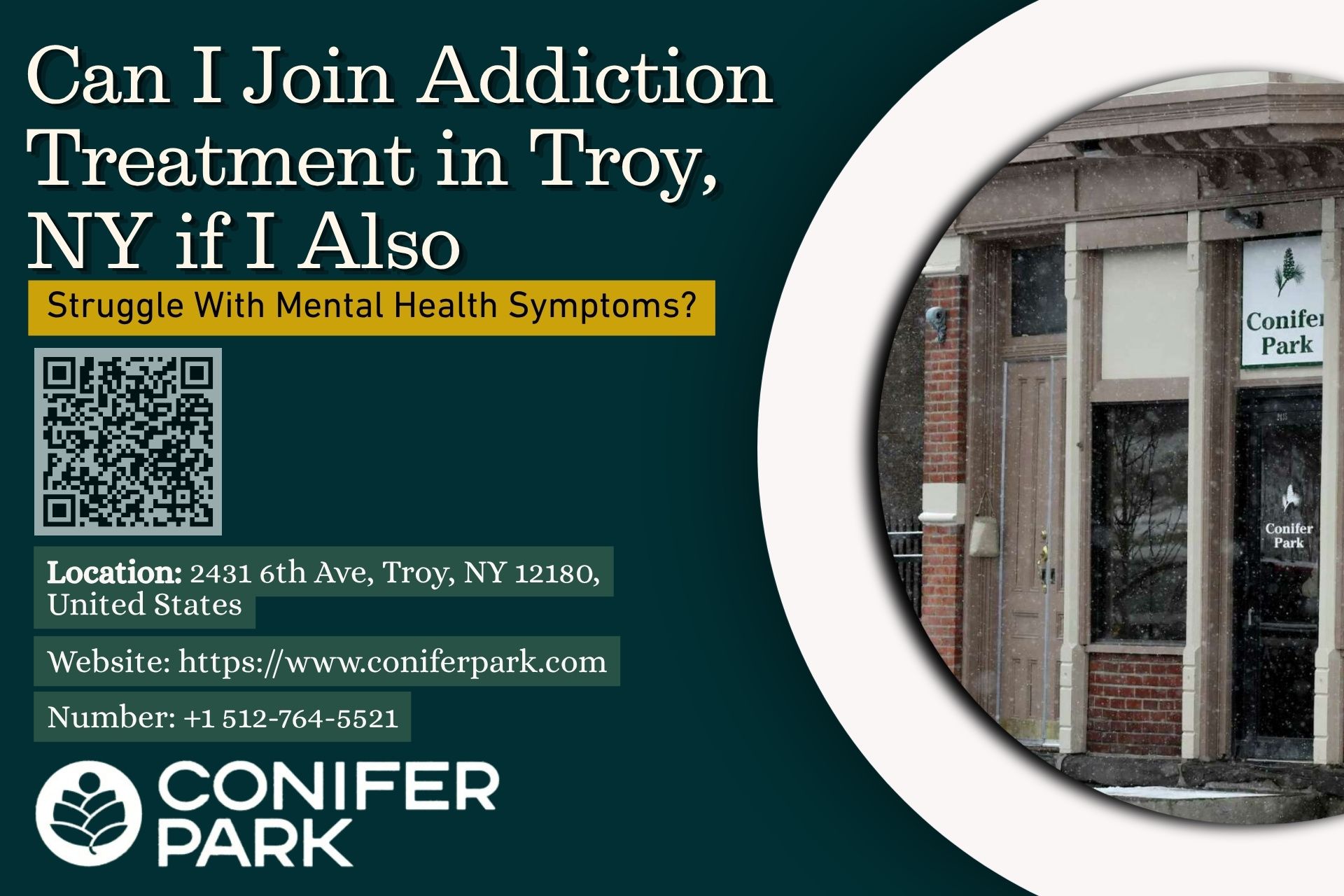
Treating addiction and a mental health condition in sequence tends to fail at the handover. Someone finishes the substance use piece, returns to untreated anxiety, and the pull toward drinking is waiting exactly where it was left. Conifer Park's outpatient addiction treatment clinic on 6th Avenue runs both sides in one plan, with dual-focused groups, individual counseling and medication management coordinated by a single clinical team, and has provided addiction treatment in New York since 1983. If you are comparing providers, ask whether their addiction clinician and their mental health clinician are in the same room, because that answer separates integrated care from a referral.
Sequential and integrated care are two distinct models, and the one a provider uses shapes the outcome more than any individual technique does.
Sequential treatment addresses one condition and then the other. Older models often stabilized substance use before turning to mental health, and the gap that opens in between is the problem. Untreated depression or anxiety keeps driving the pull toward using well after physical dependence has ended, so the person is asked to hold on through the exact symptoms that made substances appealing in the first place.
Integrated treatment closes that gap. Both conditions are addressed at once, by the same team, inside the same program, so the addiction clinician and whoever manages the mental health side coordinate directly rather than passing a file between them. There is no handoff to lose information in, and no lag between treating one condition and starting on the other.
The shape of a week depends on which level of care the assessment recommends. Our dual diagnosis outpatient treatment runs at the intensive outpatient level, three hours per session, three days a week, which comes to roughly nine hours of structured clinical contact while leaving the rest of the week intact for work and family.
Those hours divide across group sessions, individual counseling appointments and clinical check-ins that track how both conditions are responding. Sessions run throughout the day Monday through Friday, with Saturday morning availability, and the scheduling is part of the clinical logic rather than a convenience. Keeping a job, a routine and a household running provides the stability that recovery is built on, so a treatment schedule that forces a person to abandon those structures is harder to sustain than one that works around them.
The therapeutic work in our Troy co-occurring programming draws on several established modalities:
Trauma work deserves particular attention here, because it frequently decides whether treatment holds. For someone whose drinking or drug use began as a response to something that was never addressed, working through that experience is not a separate track running beside addiction treatment. It is the same recovery process, and leaving it out tends to explain why an earlier attempt came apart.
If you are unsure whether your situation counts as co-occurring, that is what the assessment establishes. No prior mental health diagnosis is required to begin.
Outpatient co-occurring treatment fits adults with a stable living situation, a manageable level of mental health symptoms, and no immediate need for medically supervised withdrawal. People stepping down from an inpatient stay, people early in recovery with real motivation, and people who need structured clinical support while holding a job all tend to do well at this level of care.
It is not the right starting point for everyone. Acutely severe mental health symptoms, a need for medical detox before therapy can begin, or a home environment too unstable for regular attendance all point toward a higher level of care first. The clinical assessment determines which category applies, and the recommendation comes from the actual clinical picture rather than a generic checklist. Where a higher level is needed, our Glenville campus provides detoxification and inpatient care inside the same organization, so a transfer does not mean restarting intake.
Many clients arriving at our Troy clinic for co-occurring treatment have been through addiction treatment before. Where that earlier programme focused on substance use and handled mental health as secondary or missed it entirely, the gap usually explains why recovery did not hold, and repeating the same approach is unlikely to produce a different result.
Integrated treatment is a substantively different clinical experience. Dual-focused groups, simultaneous attention to both conditions, and clinicians who understand how a mood state creates vulnerability to craving add up to something a programme built only around addiction cannot offer. For someone whose history suggests the mental health piece was the missing element, this is a genuinely different approach rather than another round of the same one.
Every new client begins with a clinical assessment covering both substance use and mental health history, and the clinician builds the full picture before recommending a level of care or a program structure.
Assessments are typically available within 24 hours of first contact, and walk-ins are welcome during clinic hours. The care plan that follows is not fixed. It adjusts as both conditions respond and as clinical needs change, and if outpatient stops holding at any point, moving up a level happens inside the same organization without starting over.
They describe the same thing. Both mean a person has a substance use disorder and a mental health condition at the same time. Different clinicians and programs favour different terms, and neither implies a different standard of care.
No. The assessment at our Troy clinic identifies what is present. Many clients arrive without a formal diagnosis and receive one as part of the evaluation.
Yes. Sessions run throughout the day Monday through Friday with Saturday morning availability, and telemedicine is available when attending in person is not possible on a given day.
Treatment records are protected under HIPAA and 42 CFR Part 2, a federal regulation providing additional confidentiality protections specifically for substance use disorder treatment records. Information is not shared without your written consent.
If addiction and a mental health condition have both been part of the picture, an assessment at our Troy clinic is where the two get looked at together. Walk in during clinic hours, or call and a clinician will usually see you within 24 hours.
Conifer Park, Outpatient Treatment Center, Troy
Address: 2431 6th Ave, Troy, NY 12180
Phone: (518) 274-5143
Intake: (800) 926-6433
Hours: Monday to Friday, 8:00 AM to 6:00 PM. Saturday, 8:30 to 11:00 AM.


.jpg)



























.jpg)

















.jpg)