How Soon After a DWI Arrest Should You Schedule an Evaluation in Troy, NY?
October 30, 2026


October 30, 2026

Most people arrested in Troy should schedule a DWI evaluation within one to two weeks, and sooner if a court date is already on the calendar. A DWI evaluation is a clinical interview that looks at whether alcohol or drug use is a problem and what treatment, if any, should follow. Booking early leaves room to finish whatever the evaluation recommends.
We run DWI evaluations at our outpatient clinic in Troy for adults across Rensselaer County and the wider Capital Region. Conifer Park has operated in New York State since 1983, and our clinic is employee owned, which means the staff who sit across from you hold an ownership stake in the organization. We can usually arrange an assessment within 24 hours of your call, and walk-ins are welcome.
Time is the one resource you control after an arrest. Court dates, license actions and program enrollment all move on schedules set by other people, and an evaluation is the single piece you can put in motion yourself. Getting it on the books in the days after the arrest, rather than the week before a hearing, changes how much room you have left.
That room matters because the evaluation is rarely the last step. If a clinician recommends treatment, you then need weeks or months to complete it, and nobody will shorten that for you. People who book early often walk into court already enrolled, and knowing how outpatient addiction treatment works ahead of time makes that enrollment easier to commit to, which reads very differently than a promise to start. People who book late tend to spend the hearing explaining a delay.
Two separate bodies look at your case, and they want different things. A judge wants to know whether a substance use problem contributed to the arrest and whether you are addressing it. The New York State Department of Motor Vehicles wants documented proof before it restores driving privileges, and that proof moves through a state reporting system used by approved evaluation providers.
Neither one accepts a verbal account. Both work from a written clinical report produced by a provider approved by the New York State Office of Addiction Services and Supports, the agency known as OASAS that licenses and oversees addiction treatment providers across the state. Until that report exists, your file sits open and nothing downstream can move.
Scheduling an evaluation. Our Troy intake team books DWI evaluations for adults throughout Rensselaer County, usually within a day of your call.
Delay compounds quietly. A person who books an evaluation three months after arrest has not just lost three months, they have lost the chance to show a pattern of follow through at the exact moment someone is deciding what to do with their case. The record shows a gap, and gaps invite questions.
There is a clinical cost too. Drinking or drug use rarely holds steady during a stressful legal stretch, and a problem that was manageable at arrest can be worse by the time anyone looks at it. We see that pattern often enough to name it plainly. The research on consequences of putting off treatment lines up with what walks through our door, and the people who struggle most are usually the ones who waited longest.
Showing up prepared shortens the appointment and keeps the report from stalling later. That preparation matters just as much whether you're booking DWI evaluations in Troy for the first time or returning after a gap in your case. Most of what we need is paperwork you already have from the arrest, plus the names of people who can speak to your history.
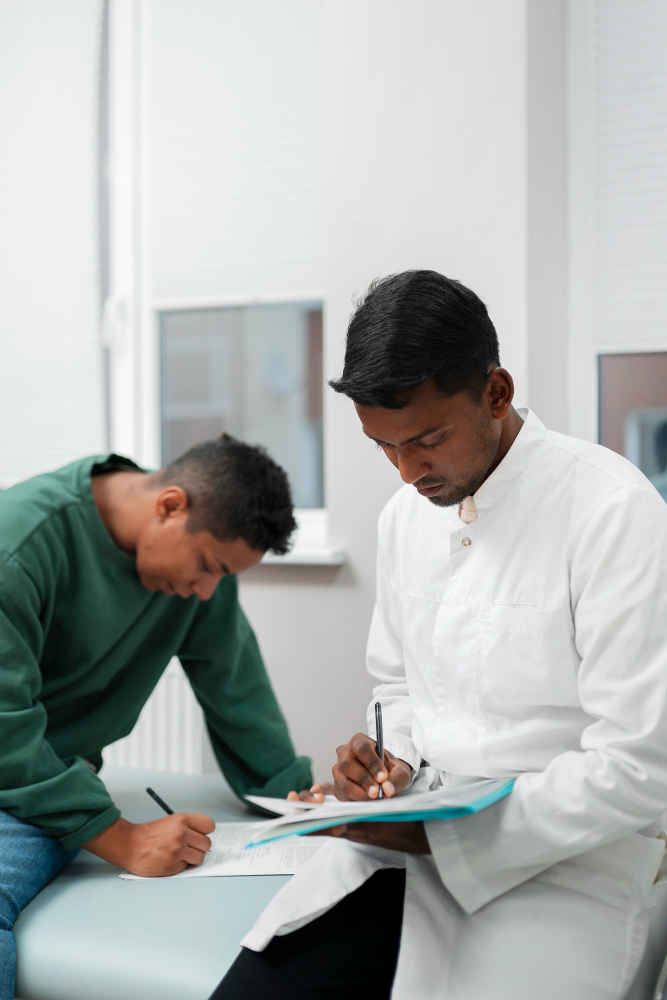
Bring whatever you have, even if the set is incomplete. Missing items can be added afterward, though each one that arrives late pushes the written report back by days, and sometimes longer when a collateral contact proves hard to reach.
Give those contacts a heads up before you come in. A family member who answers an unfamiliar number from a clinic is a much faster path to a finished report than one who screens the call twice and returns it a week later. People underestimate how often that single step separates a report finished in days from one finished in a month.
The appointment runs about two hours with one of our clinicians. We go through your substance use history, health and mental health background, living situation and prior treatment, then review your driving record and speak with the collateral contacts you provided. Testing is part of the visit. The written report follows, and we go over the findings with you before anything is submitted.
What happens next depends on what the evaluation finds. Some people need education only. Others are referred into regular outpatient treatment, which runs one to three sessions per week, or into our intensive outpatient program, which meets three times weekly for three hours per session. People with both a substance use disorder and a mental health condition, a pairing clinicians call dual diagnosis, can move into our dual focused groups. Nobody gets routed somewhere they do not belong, and the way we conduct initial clinical assessments is the same whether you arrived through a court referral or on your own.
Do I need an appointment, or can I walk in?
Walk-ins are welcome at our Troy clinic. If you would rather schedule ahead, we can usually arrange an assessment within 24 hours of your call. Scheduling tends to work better for a DWI evaluation specifically, since the appointment runs about two hours and a clinician needs that block set aside for you.
How long does a DWI evaluation take?
Plan on roughly two hours. That covers the clinical interview, the review of your driving record and the testing portion. The written report is completed afterward, and we go through the findings with you before it goes anywhere else.
Does the evaluation automatically mean treatment?
No. The evaluation determines whether treatment is recommended and at what level. Some people are referred to education only, others into regular outpatient or intensive outpatient care, and a few into a higher level of care. The recommendation follows what the clinical picture supports.
Will my employer find out?
Treatment records are protected under HIPAA and 42 CFR Part 2, a federal regulation providing additional confidentiality protections specifically for substance use disorder treatment records. Information cannot be released without your written consent. The exception is a disclosure you authorize yourself, such as one to an employer assistance program or a licensing board.
Can I attend treatment while working full time?
Yes. Sessions run at multiple times during the day, and evening and Saturday appointments are available for DWI services specifically. Most of our clients hold full time jobs throughout treatment, and we build the schedule around that rather than the other way around.
Does the Troy clinic accept Medicaid?
Yes. We accept Medicaid, Medicare, most private plans and self pay. Named carriers include Healthfirst, Excellus BlueCross BlueShield, Fidelis Care, MetroPlus Health and MVP Healthcare. Call ahead to confirm your specific plan before the appointment.
What if I need more than outpatient care?
Clients who need medical detoxification, inpatient rehabilitation or psychiatric stabilization can transfer to our 225 bed campus in Glenville without restarting intake. Same organization, same records, no second assessment from scratch.
Call our Troy clinic at (518) 274-5143 to schedule a DWI evaluation, or reach our intake line at (800) 926-6433. Walk-ins are welcome during clinic hours, and confidential help is available 24 hours a day.
Related Topics: