How Dual-Focused Groups Help With Mental Health and Addiction in Troy, NY
September 22, 2026
.png)

September 22, 2026
A standard addiction group can spend twelve weeks on triggers and cravings without ever naming the anxiety underneath them. Anxiety, depression, PTSD and trauma histories do not pause while someone works a recovery programme, and left unaddressed they quietly shape the coping patterns that drive a return to use. Conifer Park's outpatient rehab center in Troy, NY runs dual-focused groups led by licensed counselors, serving adults across Rensselaer County and the Capital Region. No prior mental health diagnosis is needed to join one, because the assessment establishes what is present.
A dual-focused group is not a standard addiction group with mental health topics dropped in occasionally. It is structured from the ground up for people carrying both conditions.
Standard addiction groups cover substance use triggers and cravings, relapse prevention, and building a sober support network. That material is sound, and for many people it is enough. For someone whose substance use is tightly wound into trauma responses or mood cycles, a group that never touches those connections leaves out a significant part of what needs treating, and the person is left to translate general recovery material into their own more complicated situation on their own.
Mental health conditions and substance use disorders reinforce each other, which makes treating them separately the harder clinical path. Someone who has used alcohol to manage anxiety will find that anxiety rebounds sharply in early sobriety, often more intensely than before they started drinking, because the thing that was suppressing it has been removed.
If the treatment plan does not address the anxiety directly, the pull back toward alcohol stays exactly where it was. Sequential treatment, handling one condition and then the other, misses this dynamic entirely. Clinical guidance has moved toward integrated care for this reason, and a program that claims to treat co-occurring disorders while running addiction groups and mental health groups separately, with no coordination between the two, is not offering the same thing.
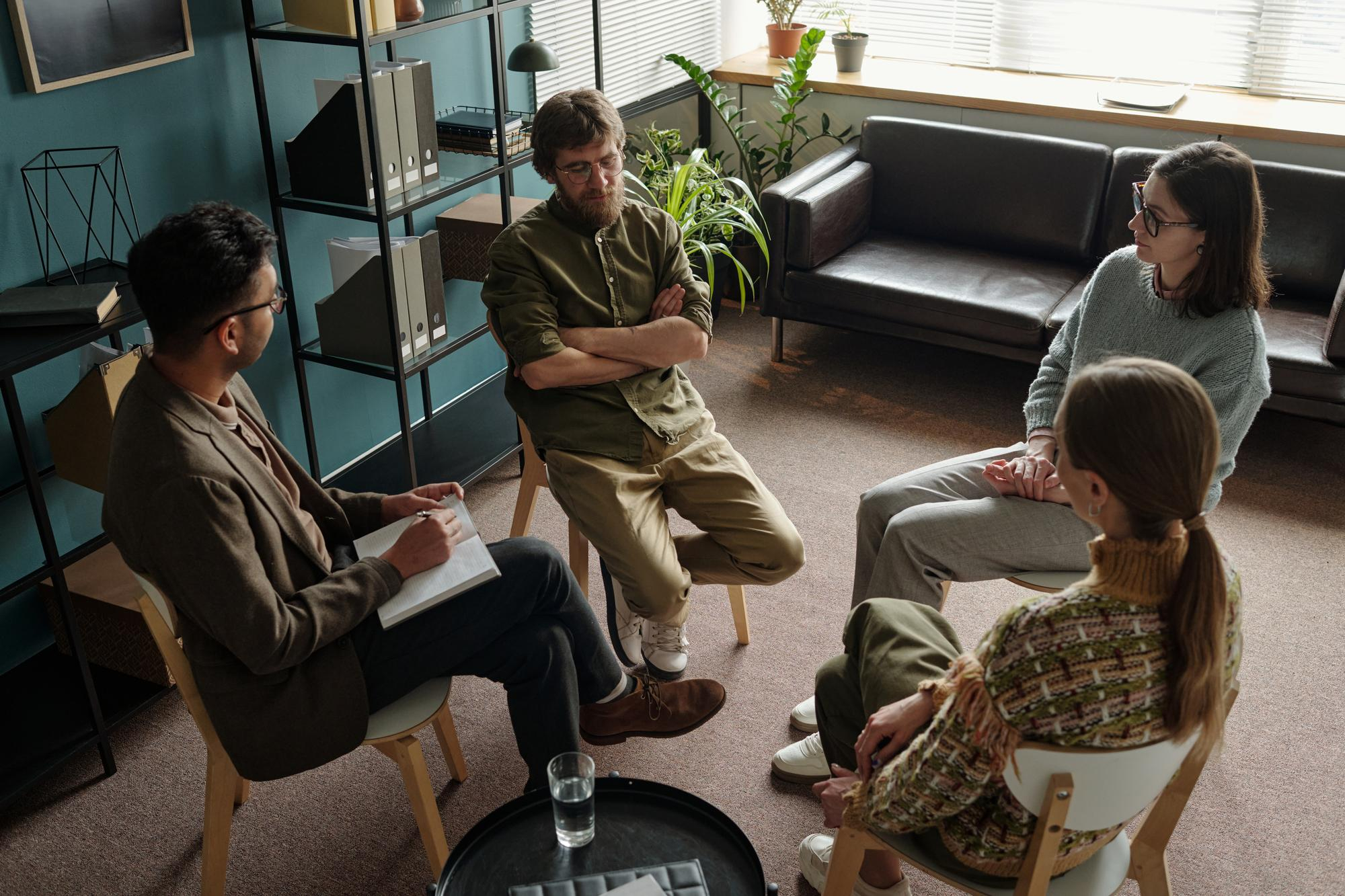
Sessions are led by a licensed counselor and structured around what the people in the room are managing. The material sits at the intersection of the two conditions:
The format carries value beyond the content. Both addiction and mental health conditions isolate people, and both carry stigma that gets heavier when they arrive together. Sitting with others managing the same combination, and being understood without first having to explain why recovery feels more complicated in your case, does something that individual therapy alone cannot replicate. It reduces the sense that a person is dealing with something uniquely broken in themselves, and that directly affects whether they stay in treatment.
If this describes your situation, the assessment at our Troy clinic is the way to find out which group fits. Walk-ins are welcome during clinic hours.
Dual-focused groups serve adults in outpatient treatment who have both a substance use disorder and a mental health condition. The conditions most commonly present include anxiety disorders, major depression, PTSD, bipolar disorder and borderline personality disorder.
One group is worth naming specifically: people who have been through addiction treatment before without lasting results. Where the earlier programme did not address the mental health side, that absence is frequently a large part of why recovery did not hold, and returning to a program that genuinely integrates both is a different clinical experience rather than a second attempt at the same one. Our dual diagnosis program in Troy is structured that way, and the assessment clarifies what was missing and what the right structure looks like this time.
Group sessions are one component of a broader plan. At our Troy clinic they sit alongside relapse prevention groups, individual counseling, medication-assisted treatment where clinically appropriate, and regular reviews that track how both conditions are responding.
Individual counseling gives clients room to work through what surfaces in group, including the material that does not belong in a shared setting. That one-on-one time with an assigned therapist reaches ground group work cannot always cover, and the two formats feed each other, since something raised in group often becomes the focus of the next individual session. For clients on medication, management runs alongside both, with check-ins on dosing, side effects and overall progress keeping the medical side connected to the clinical work rather than running parallel to it.
The skills built in these groups, managing anxiety, depression or trauma symptoms without reaching for a substance, are meant to outlast the programme. That is the clinical goal. Not sobriety that holds while someone is attending three sessions a week, but the self-awareness and coping capacity that make it manageable when the structure is gone and life turns difficult.
Recovery built on treatment that addressed both conditions tends to be steadier than recovery built on treatment where mental health was secondary. The group work is one of the elements that makes that difference, and it works because it is consistent, so attendance in the early months matters more than any single session does.
No. The assessment at our Troy clinic identifies what is present and recommends the right group. Many clients arrive without a formal diagnosis.
A regular addiction group works on substance use. A dual-focused group works on how a mental health condition and substance use interact, which changes what the sessions cover and who is in the room.
Sessions run throughout the day Monday through Friday, with Saturday morning availability. Telemedicine is available when attending in person is not possible on a given day.
A higher level of care is available at our Glenville campus, and the transfer happens inside the same organization with the same records, so intake does not restart.
If addiction and a mental health condition have both been part of your situation, a dual-focused group may be the piece that earlier treatment left out. Walk in during clinic hours at our Troy location, or call to arrange an assessment.
Conifer Park, Outpatient Treatment Center, Troy
Address: 2431 6th Ave, Troy, NY 12180
Phone: (518) 274-5143
Intake: (800) 926-6433
Hours: Monday to Friday, 8:00 AM to 6:00 PM. Saturday, 8:30 to 11:00 AM.


.jpg)

























.jpg)















.jpg)